
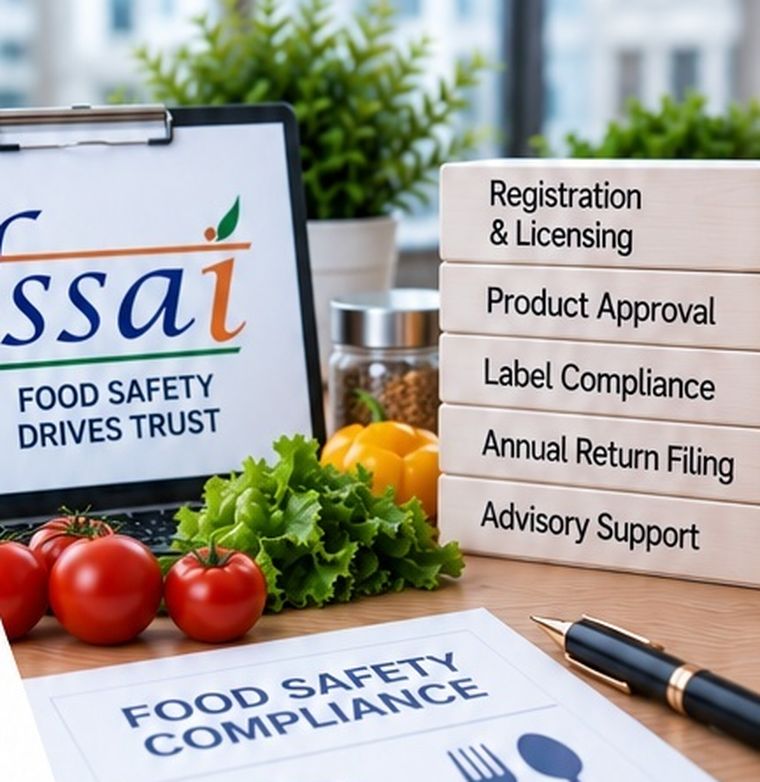
Every food business in India needs FSSAI registration or a licence. From 1 April 2026, Basic Registration applies to food businesses with annual turnover up to ₹1.5 crore, a State Licence applies above ₹1.5 crore and up to ₹50 crore, and a Central Licence applies above ₹50 crore — and to certain businesses such as importers and e-commerce operators at any turnover. Registrations and licences issued on or after 1 April 2026 no longer need periodic renewal.
*Indicative — depends on government processing times and your specific case.
Overview
From home kitchens and restaurants to manufacturers, exporters and e-commerce brands, every food business operator needs the right FSSAI registration or licence — and must keep labels, records and returns compliant.
CapEmploys identifies the right category, prepares documents such as layout plans and equipment lists, files your application and handles renewals, label reviews and annual returns.
What we offer
Registration & Licensing
- Basic Registration
- State Licence
- Central Licence
- Migration to new 2026 categories
Documentation Support
- Application documents
- Product categorisation
- Layout plan advisory
- Equipment and process flow
Label & Packaging Compliance
- Label review as per FSSAI norms
- Ingredient and nutrition information
- Allergen labelling
- Veg / non-veg logo and claims
Product Approval & Testing
- Product approval advisory
- Food category classification
- Testing requirements
- Liaison with accredited labs
Ongoing Compliance
- Annual return filing
- Record maintenance
- Periodic compliance review
- Inspection support
Advisory & Consultation
- FSSAI regulations guidance
- New product launches
- E-commerce food businesses
- Expansion to new locations
Pricing
| FSSAI basic registration | ₹1,500 |
| FSSAI State licence | ₹4,500 |
| FSSAI Central licence | ₹8,000 |
| FSSAI annual return | ₹2,500 / year |
Professional fees. Government fees, stamp duty and 18% GST are extra. Final quote depends on scope.
Documents required
- Photo ID and address proof of the proprietor / partners / directors
- Proof of possession of premises — rent agreement or ownership proof
- List of food products to be manufactured or sold
- Layout plan of the processing unit (for manufacturers)
- List of equipment and machinery (for manufacturers)
- Partnership deed / certificate of incorporation, and IEC for importers and exporters
The exact list depends on your situation — we share a personalised checklist after the first call.
How it works
Free consultation
Tell us about your business — we confirm exactly what applies to you.
Clear proposal
A fixed quote with timelines, deliverables and government fees shown separately.
Documents & filing
Share documents digitally. We prepare, review and file everything.
Updates & ongoing support
We keep you informed at every step and track what's due next.
Frequently asked questions
Which FSSAI licence do I need?
From 1 April 2026 it depends on your turnover and kind of business: Basic Registration up to ₹1.5 crore, State Licence above ₹1.5 crore up to ₹50 crore, and Central Licence above ₹50 crore. Some kinds of business, such as importers and e-commerce operators, need a Central Licence regardless of turnover — we check your category first.
I already have an FSSAI licence. Do the 2026 changes affect me?
Possibly. If your turnover now falls in a lower category, you may be able to move to it, but this does not happen automatically. Existing licences stay valid until expiry, while registrations and licences issued from 1 April 2026 no longer need periodic renewal. We can review your current licence and advise.
How long is an FSSAI licence valid?
Registrations and licences issued on or after 1 April 2026 no longer expire. Older licences remain valid for the period they were issued for and must be renewed or migrated before expiry to avoid penalties.